
Key takeaways
The A350 PFCS in one mental model
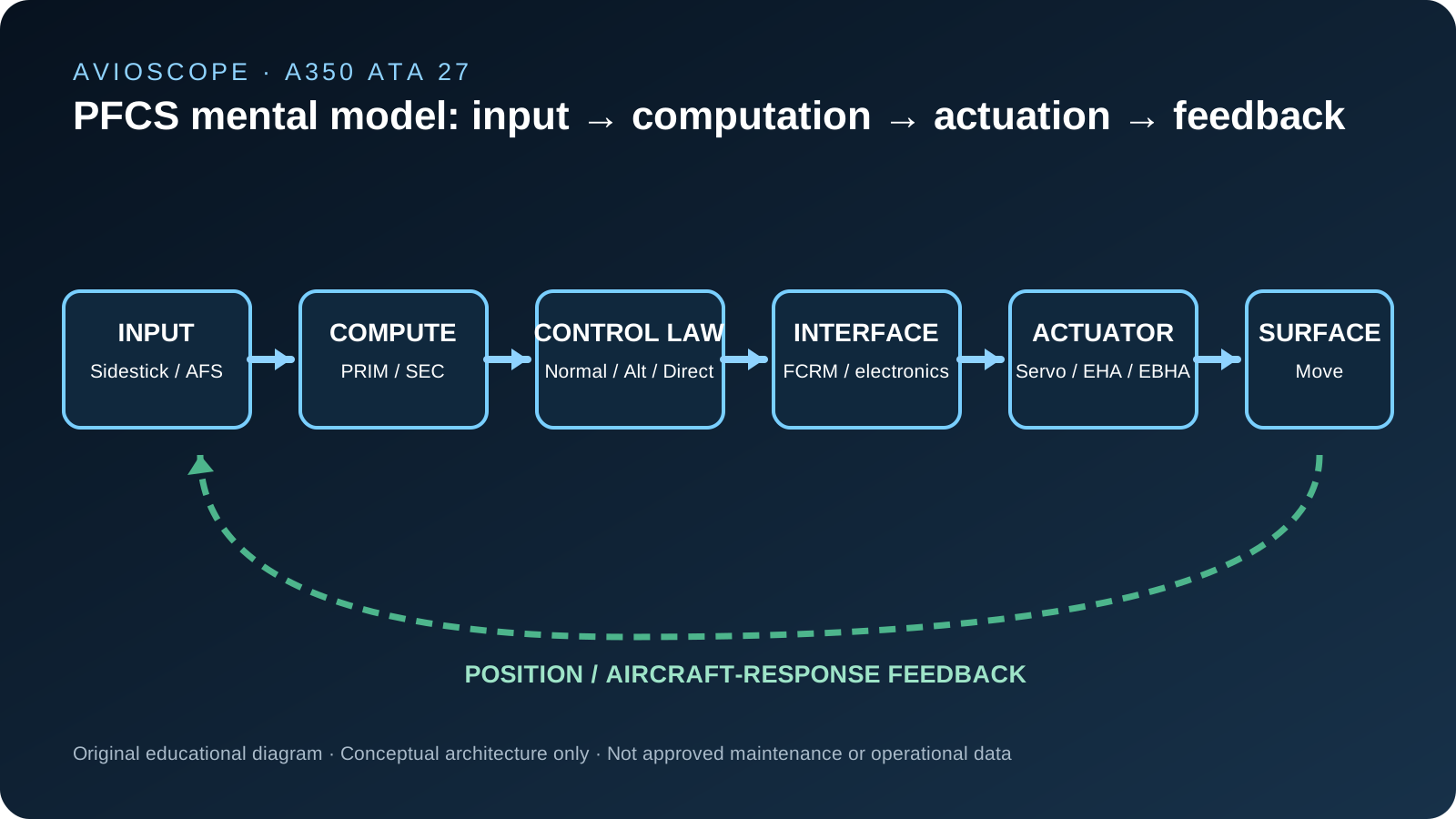
- The system can be understood as input → computation → control law → actuation → feedback.
- Three PRIMs and three SECs provide redundant flight-control computation and execution.
- PRIMs can compute Normal, Alternate and Direct Laws; SECs provide Direct Law capability.
- The aircraft combines conventional hydraulic servo-controls with EHA and EBHA technology.
- A dedicated BCM/BPS backup architecture retains limited basic control after severe failures.
- ATA 27 also includes spoiler functions, load alleviation and the High Lift System.
01 · System concept
What makes the A350 flight control system different?
In a Fly-by-Wire architecture, pilot or Autopilot inputs become electrical demands that are processed by computers before surface actuators move. The A350 extends this principle with substantial redundancy and a mixed hydraulic/electrical actuation philosophy.
For a maintenance learner, a surface problem therefore does not automatically mean a hydraulic problem. The fault path can involve input → computer → data communication → actuator electronics → electrical power → hydraulic power → actuator → position feedback.
02 · PFCS architecture
The A350 PFCS architecture in one mental model
Control inputs
Manual inputs include Side Stick Units, rudder pedals, speed-brake lever, pitch and rudder trim controls and flight-control computer switches. Automatic commands can also enter from the Automatic Flight System. The input creates a demand; it does not mechanically position a control surface.
PRIMs, SECs and supporting computers
The core architecture includes three PRIMary Computers, three SECondary Computers, the Backup Control Module, data-concentrator functions and aircraft-response sensors including inertial and rate/acceleration sources. These resources compare requested response with aircraft state and determine the required surface movement.
Actuation and feedback
Surface orders reach local actuator electronics such as Flight Control Remote Modules or other electronic modules. Feedback returns to the computing architecture, making the system closed-loop rather than simply “sidestick moved → surface moved.”
03 · Fly-by-Wire
How Fly-by-Wire works on the A350
A useful simplified chain is Pilot or Autopilot command → flight-control computer → aircraft objective → surface-deflection order → actuator electronics → actuator movement → surface position feedback.
Because computers also receive aircraft-response information, surface commands depend on aircraft state and the active control law, not only on sidestick position.
04 · Computing redundancy
PRIM versus SEC: who actually controls the aircraft?
In nominal operation one PRIM acts as the law master, while active computers execute the resulting orders through their associated actuator families. If a PRIM becomes unavailable, another computer can assume the necessary computation role.
The useful distinction is: the master-law function calculates what the aircraft should do; active computers execute the corresponding surface orders through their associated actuators. If PRIM capability is lost, SECs can provide Direct Law control for their associated execution paths.
05 · Control laws
Normal, Alternate and Direct Control Laws
| Control law | General capability | Protection level |
|---|---|---|
| Normal Law | Full normal flight-control computation | Highest available protection level |
| Alternate Law | Degraded computation following certain failures | Reduced protections |
| Direct Law | Surface movement broadly proportional to pilot demand | No flight-envelope protection |
A law reversion should be read as evidence that the architecture no longer has the combination of inputs, sensors, computing capability or surface availability required for the previous level of control.
06 · Control axes
How the A350 controls roll, pitch and yaw
Roll
Roll control uses inboard and outboard ailerons together with selected spoilers. Surface usage can change with speed so aerodynamic effectiveness and structural loading remain appropriate.
Pitch
Pitch control uses the elevators and Trimmable Horizontal Stabilizer. Elevators provide shorter-term pitch activity while the THS provides longer-term trim activity, including automatic trim when the applicable law supports it.
Yaw
Yaw control is primarily provided by the rudder, with commands arising from pedal inputs and automatic yaw-related functions. Permitted rudder travel is progressively managed with airspeed to control structural loading.
07 · Actuation
Why the A350 uses servo-controls, EHAs and EBHAs
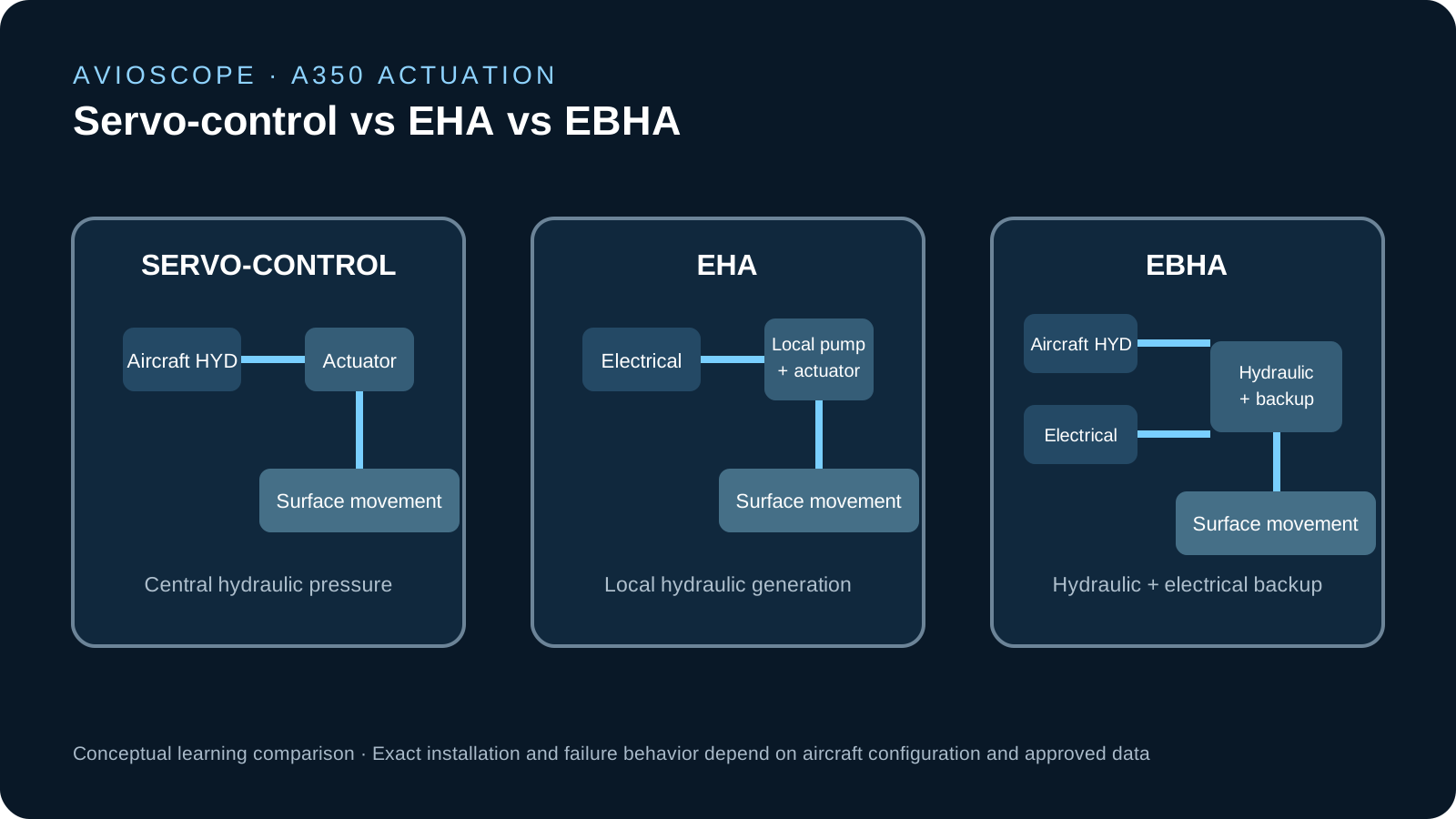
Conventional servo-control: aircraft hydraulic pressure directly supplies the actuator.
EHA — Electro-Hydrostatic Actuator: electrical energy powers a locally generated hydraulic actuation system.
EBHA — Electrical Backup Hydraulic Actuator: combines conventional hydraulic operation with an electrical backup actuation capability.
The maintenance implication is important: an actuator can have hydraulic interfaces, electrical-power interfaces, electronic control, digital command paths and multiple feedback sensors.
08 · Hydraulic loss
What happens when hydraulic power is lost?
Available control depends on the surface and actuator configuration. Some surfaces combine conventional servo-control and EHA capability; selected installations use electrical backup functions. A more useful troubleshooting question is therefore: Which actuator is installed, which computer family commands it, which hydraulic/electrical sources support it, and what backup mode remains available?
09 · Backup architecture
The electrical backup flight-control system
The Backup Control Module and Backup Power Supply provide a dedicated fallback architecture after severe loss of normal flight-control computing capability. In backup operation the architecture intentionally retains a limited set of surfaces sufficient for basic roll, pitch and yaw control rather than duplicating the complete normal PFCS.
10 · Spoilers and loads
Speed brakes, ground spoilers and load alleviation
Spoilers contribute to more than one function: roll control, speed-brake operation, ground lift dumping, spoiler droop and wing-load management. Load-alleviation functions use selected surface movements to modify spanwise lift distribution and reduce structural loads during maneuvers or gusts.
This illustrates a core A350 design principle: flight-control surfaces can be used not only to change aircraft attitude but also to actively manage aerodynamic loads.
11 · High Lift System
Slats, flaps, PCUs and SFCCs
Two Slat Flap Control Computers control and monitor the high-lift architecture. Each includes slat and flap channels. Drive torque is distributed through power-control units, transmission systems and geared actuators, with position/torque monitoring and protective functions integrated into the system.
Differential Flap Setting and aerodynamic optimization
The Active Differential Gearbox allows differential movement between flap sections. Differential Flap Setting means the high-lift architecture can support more than conventional take-off and landing deployment; it can also contribute to aerodynamic optimization and load management.
12 · Maintenance thinking
A maintenance engineer's mental model for ATA 27
- Demand: Where did the command originate—pilot, Autopilot or an automatic function?
- Computation: Which PRIM, SEC, SFCC or backup computer should calculate or execute it?
- Data path: How are command and feedback transmitted?
- Power: Which hydraulic and/or electrical sources are required?
- Actuator mode: Is the actuator active, damping, electrically backed up or unavailable?
- Feedback: Which sensor confirms actuator or surface response?
- Reconfiguration: What resource takes over if the normal path fails?
- Indication: Where does the resulting status or fault become visible?
This framework turns a complicated ATA chapter into a cause-and-effect system and provides a useful basis for future interactive learning.
Common misconceptions
What to avoid when learning A350 flight controls
“The sidestick directly commands an aileron angle.”
Not in the normal Fly-by-Wire sense. The pilot provides a control demand that is processed according to aircraft state and the applicable control law.
“The SECs are only monitoring computers.”
No. SECs participate in active execution and provide Direct Law capability.
“An EHA is simply an electric linear actuator.”
No. An EHA uses electrical energy to generate local hydraulic actuation.
“Loss of both hydraulic systems means complete loss of flight control.”
The architecture includes electrically powered actuation and additional backup provisions; exact surface availability depends on configuration and failure condition.
Frequently asked questions
A350 flight-control FAQ
What does PFCS mean on the Airbus A350?
PFCS means Primary Flight Control System. It encompasses the primary surface-control architecture, computers, actuators, sensors and associated functions for roll, pitch and yaw.
How many PRIM and SEC computers does the A350 have?
The training configuration used for this learning article identifies three PRIMs and three SECs.
What is the difference between a PRIM and SEC?
PRIMs can calculate higher-level control laws as well as Direct Law. SECs provide Direct Law computation and participate in execution and reconfiguration.
What is an EHA?
An Electro-Hydrostatic Actuator uses electrical power to operate a local hydraulic actuation system.
What is an EBHA?
An Electrical Backup Hydraulic Actuator combines conventional hydraulic actuation with an electrically powered backup capability.
What controls the A350 slats and flaps?
Two Slat Flap Control Computers control and monitor the High Lift System.
Final takeaway
Read ATA 27 as one distributed control architecture.
The Airbus A350 flight control system is best understood as a redundant chain connecting pilot and automatic demands to control-law computation, digital interfaces, actuator electronics, hydraulic/electrical actuation and feedback. Once that chain is clear, PRIM/SEC reconfiguration, EHA/EBHA operation, backup control, load alleviation and high-lift functions become parts of the same engineering logic rather than isolated component lists.